news
The Power Nap Strategy (NEWS Update) 💤 Let’s take a quick nap together with the iDREAMING Eye Mask!
15
Oct
Oct

The Ultimate “Power Nap” Method
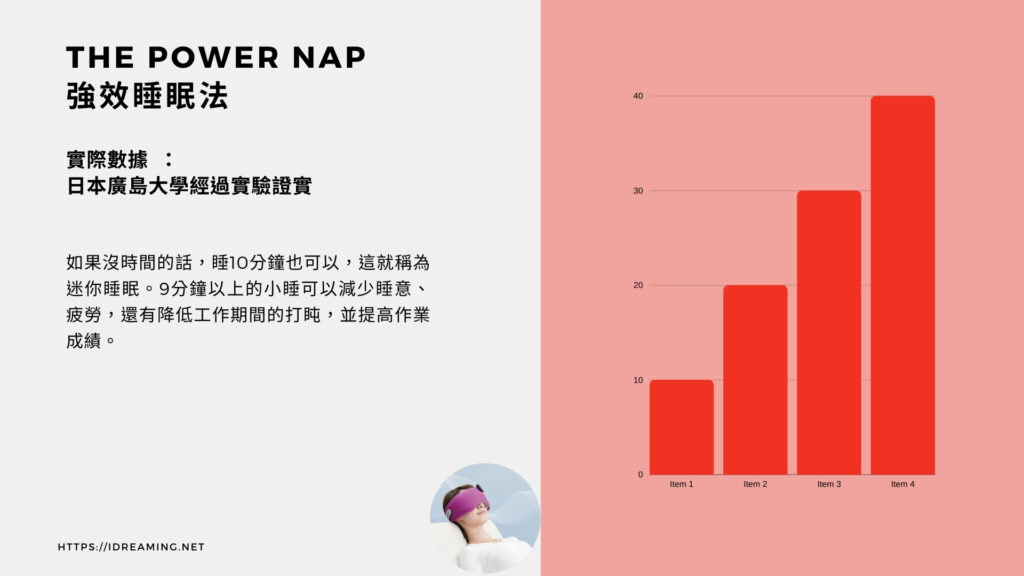
On the US West Coast, companies like Google and Nike, which actively encourage employees to take naps during work hours, are well aware of the profound impact of power napping. It is said that they have even developed specialized mobile apps tailored for napping. These powerful benefits of power napping are firmly backed by experimental data.
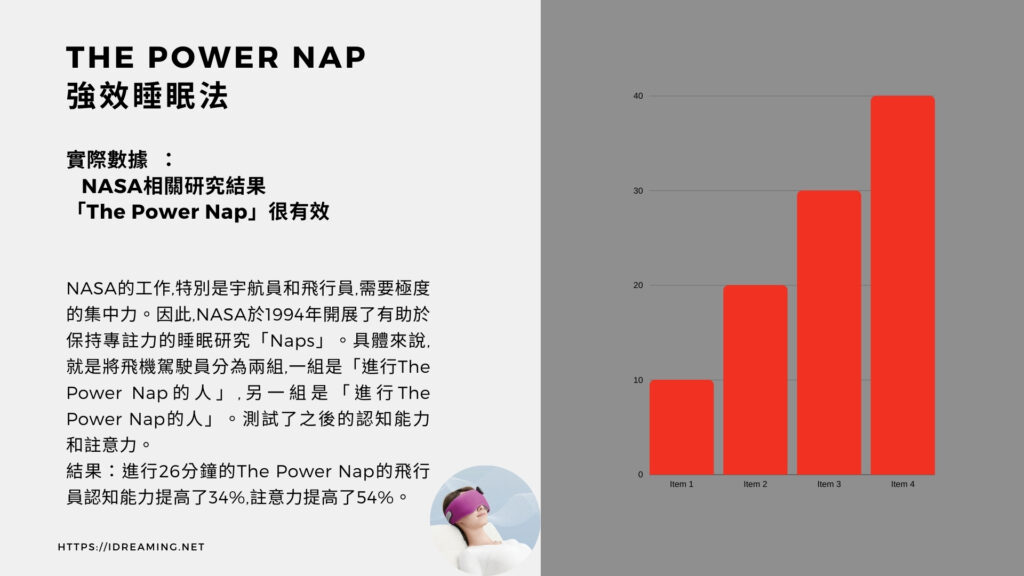
Let us revisit an experimental setup where participants are required to press a button the moment a circular image appears on a screen. To precisely record their level of alertness, researchers measured reaction times to test what happens when 13 subjects stay awake continuously for nearly 90 hours.
Unsurprisingly, the longer they remained awake, the slower their reaction times became, and “lapses in response”—such as pressing the button incorrectly—gradually increased. However, researchers discovered that if the routine was modified to include a 2-hour nap for every 12 hours of continuous wakefulness (totaling 4 hours of sleep a day), these errors decreased. That being said, relying solely on a 4-hour daily nap routine was still insufficient to fully normalize reaction times.
While this experimental design of a 2-hour nap every 12 hours does not fit the typical lifestyle—which is one of the reasons why I do not entirely recommend long naps for business professionals—there is reassuring news.
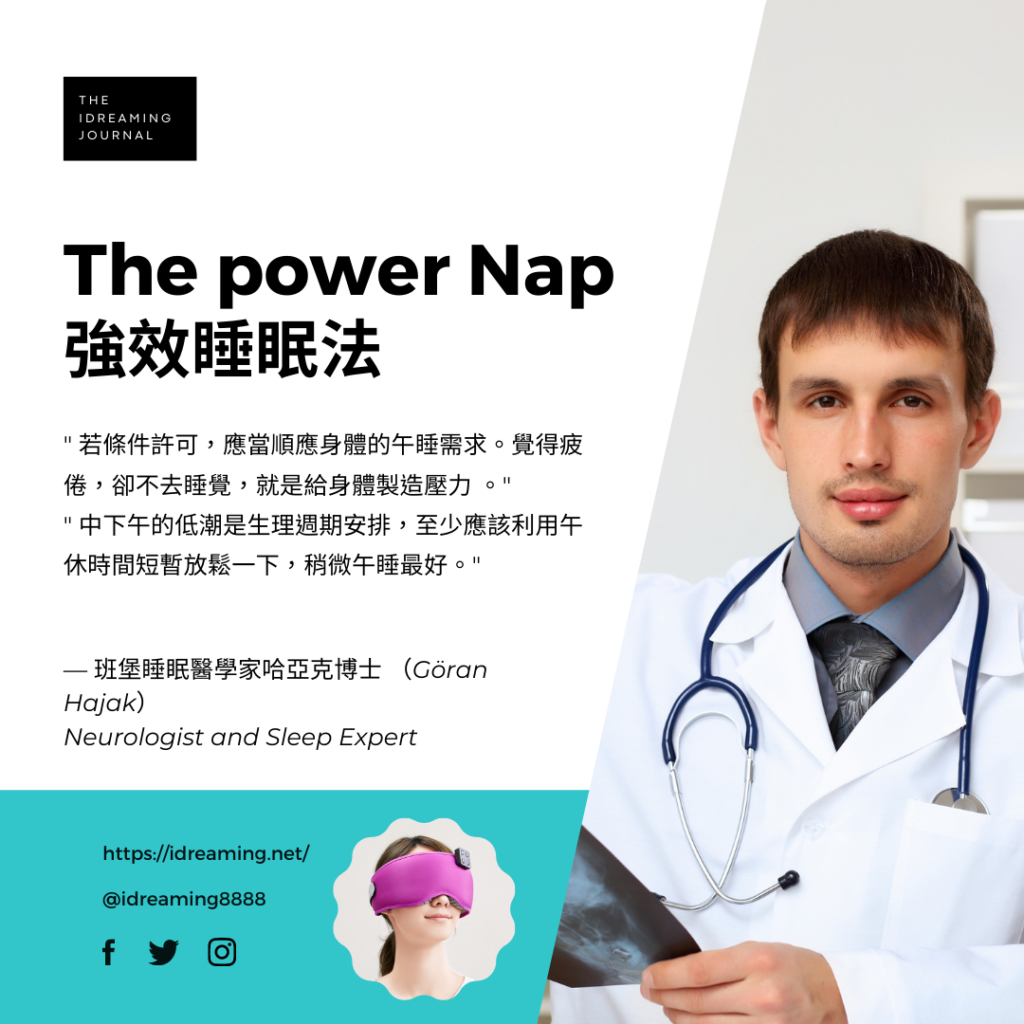
Current studies confirm that a short nap of around “20 minutes” is sufficient to restore cognitive responsiveness to a certain degree. While it may still be too early for traditional corporate cultures to proactively provide nap-friendly workspaces, wouldn’t you agree that a quick 20-minute nap is a far better choice than forcing yourself to endure exhaustion, which only plummets your overall efficiency? It allows you to fully unlock your remaining time and energy for the rest of the day.


Dr. Satoshi Tsubota, Vice President of Uruharu Clinic, states:
“Napping can be categorized into four types: Micro Naps, Mini Naps, Power Naps, and Holiday Naps. We simply need to use the Power Nap as our foundation and combine it with the others depending on the situation.”
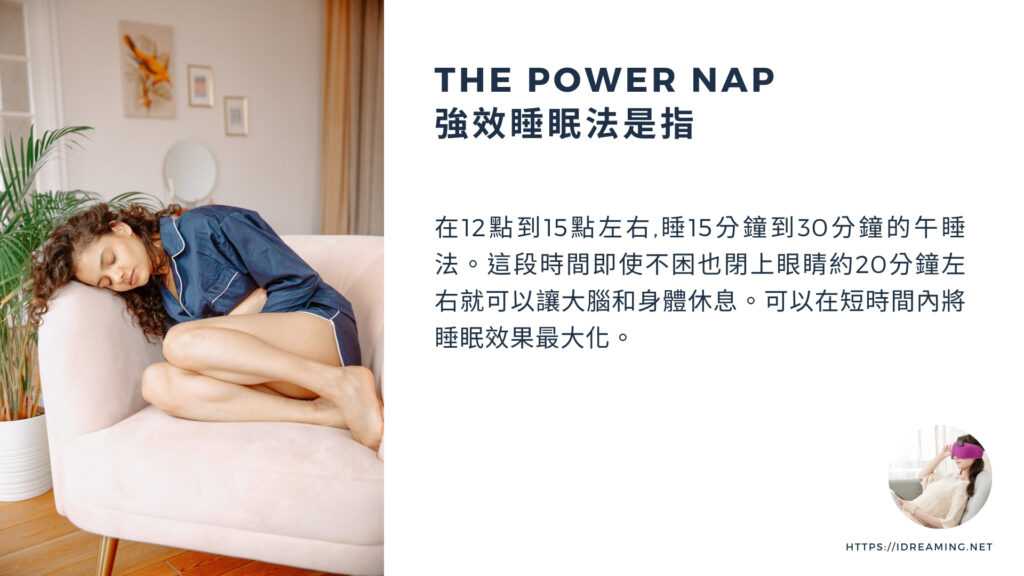
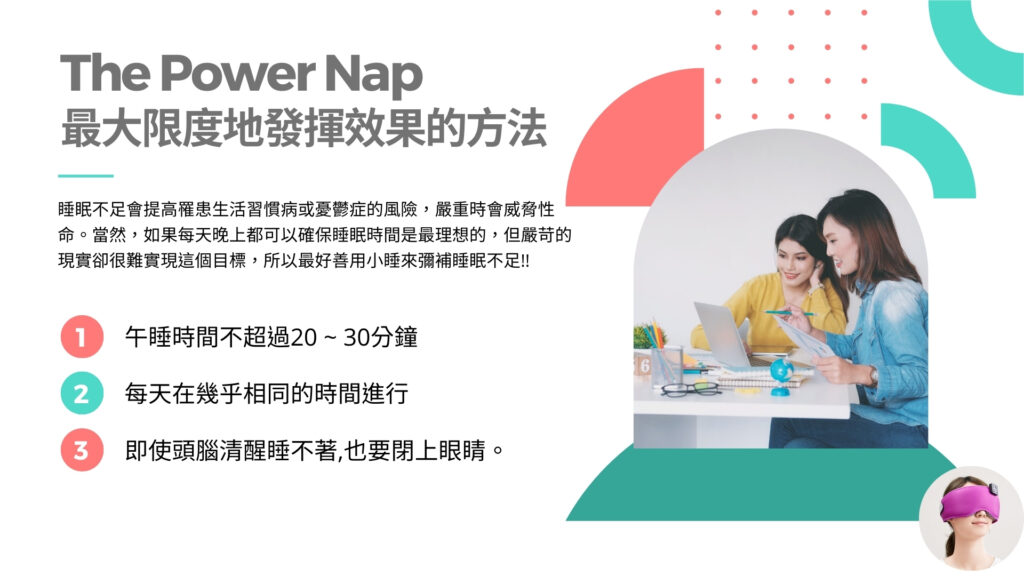
A Power Nap refers to an afternoon sleep of around 20 minutes. If you have a one-hour lunch break, setting aside 20 minutes for a quick nap is far from difficult. Furthermore, Dr. Tsubota emphasizes, “You should nap every single day.” According to our body’s internal biological clock, the period right after lunch is when drowsiness is at its peak. If you can leverage this optimal timing to get a proper power nap, your remaining work for the day will progress much more smoothly.
The Power Nap